Rubber Roof Shrinking or Pulling at the Edges? What's Happening
Quick Answer: A rubber (EPDM) roof that looks like it's pulling away at the edges or tenting up along a parapet wall is showing signs of membrane shrinkage, a permanent contraction of the sheet back toward its own center. It's different from the normal expansion and contraction rubber roofs are built to handle. Shrinkage usually starts small, a slight gap at a termination bar or a soft ridge along a wall, and gets more pronounced with every hot summer and cold winter it goes unaddressed. Whether it's a minor cosmetic issue or an active leak risk depends on how far it's progressed and where on the roof it's happening, so it's worth having a roofer look at the specific spots before deciding what to do.
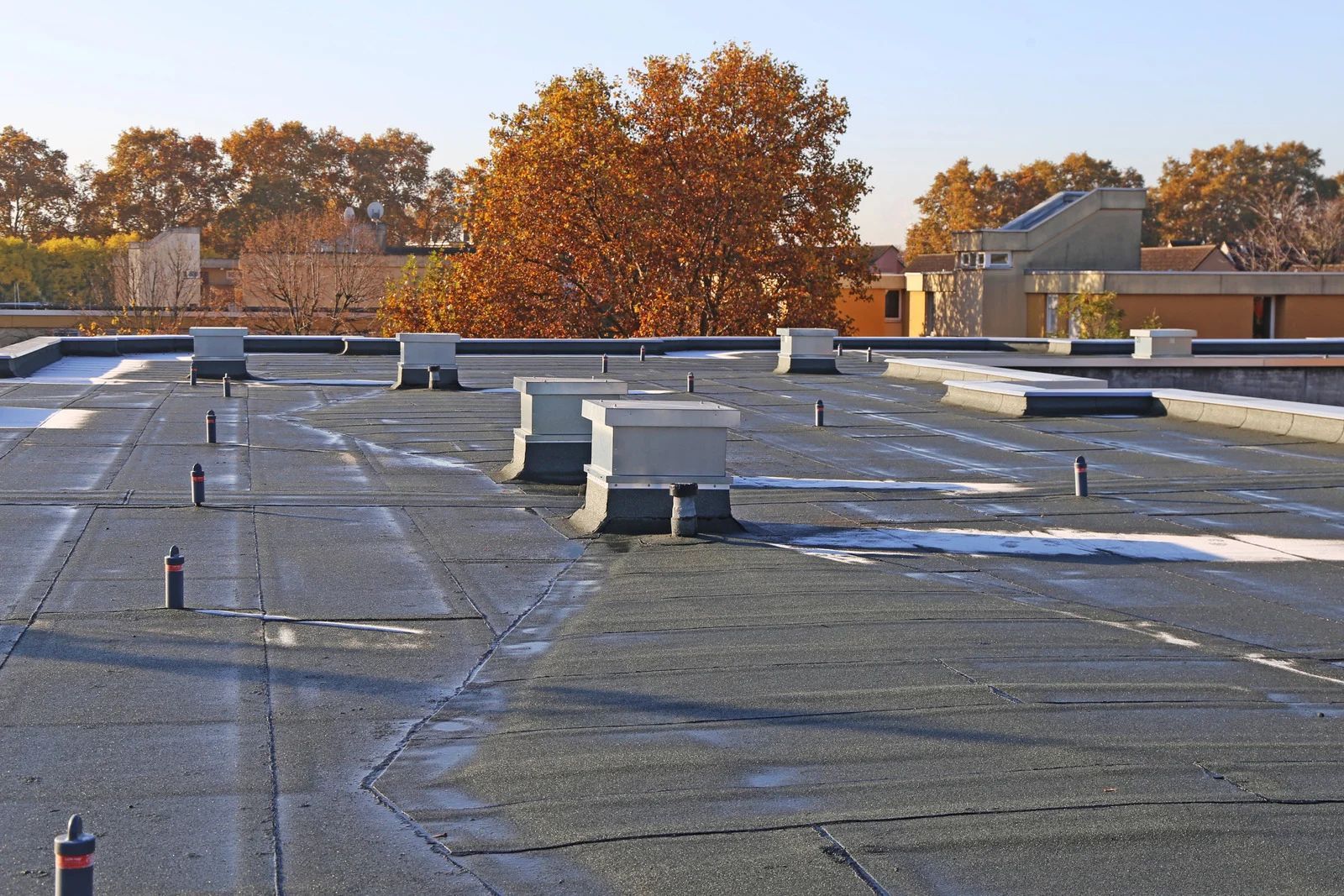
You're up checking the roof after a windy stretch, and something along the parapet wall doesn't look right. There's a raised ridge running along the base of the brick where the membrane used to sit flat, almost like the rubber is trying to climb the wall instead of meet it. Out at the edge, near the termination bar, there's a thin gap where you can see daylight that wasn't there when the roof went in. Nothing is leaking through the ceiling yet, but the roof clearly isn't sitting the way it did a few years ago.
That pulling and tenting look is one of the more distinct things a rubber roof can do, and it's not the same thing as a roof simply expanding on a hot day. Once you know what's actually happening underneath the membrane, it gets a lot easier to tell a spot worth watching from one that needs attention now.
What EPDM Shrinkage Actually Is
It's A Permanent Pull, Not Normal Flex
Every rubber roof expands and contracts slightly as temperatures change, and the membrane is designed to handle that movement. Shrinkage is different. Like a stretched rubber band, an aging membrane under tension gradually pulls inward toward its center. Unlike normal thermal movement, that tension does not reverse when temperatures drop.
It Happens Toward The Center Of The Sheet
On roofs made from multiple EPDM sheets, each membrane panel naturally pulls toward its own center as shrinkage develops. This can create separation between adjacent sheets at field seams, rather than only along the roof perimeter. That is why inspections should check seams throughout the roof.
Older, Ballasted Roofs Tend To Show It More
A membrane held down with loose stone ballast generally has more freedom to move than one fully adhered or mechanically fastened across its surface. That additional movement allows shrinkage to become visible over time, rather than remaining restrained by adhesives or fasteners across the roof system.
Where It Shows Up First on a Brooklyn or Queens Rowhouse Roof
Shrinkage doesn't announce itself in the middle of an open roof field. It shows up at the places where the membrane is anchored or interrupted.
Tenting Along Parapet Walls
This classic sign appears on rowhouse and brownstone roofs with brick parapets. As the membrane pulls from the inside corner, it lifts into a small ridge resembling a tent, creating an air gap where water and wind can enter.
Gaps At The Termination Bar
Along the roof edge, the membrane is secured beneath a termination bar or drip edge. As shrinkage pulls the sheet inward, it can detach from the bar, exposing the edge and compromising the water cutoff.
Separation At Seams
Two adjoining EPDM sheets may gradually separate at their bonded seam as each panel shrinks toward its center. Seam separation is especially concerning because these joints sit within the roof field rather than only around edges.
Pulling At Penetrations
Vent pipes, HVAC curbs, and skylights interrupt the membrane and create areas where shrinkage concentrates tension. Flashing around these penetrations can stretch and thin, replacing a smooth rubber collar with a visibly stressed ring.
Why Rowhouse Rubber Roofs Shrink Faster Than the Average Roof
A few things about how flat roofs get built and used in New York City push shrinkage along faster than it might move on a roof somewhere with less sun, less foot traffic, and simpler rooflines.
Direct Sun On A Dark Membrane Builds Serious Heat
Black EPDM absorbs substantial heat, especially under direct southern exposure without shade. Repeated heating and cooling accelerates the loss of oils that maintain flexibility, leaving the membrane stiffer and more vulnerable to shrinkage over time.
Rooftop HVAC And Exhaust Add Chemical Stress
Condensers, exhaust fans, and kitchen vents can deposit petroleum-based oils onto EPDM over time. These contaminants attack the rubber compound, causing affected sections to degrade, stiffen, and shrink faster than surrounding areas of membrane.
A Rushed Or Undersized Install Leaves Less Margin
A membrane fastened before properly relaxing, or installed without reinforced perimeter and wall termination strips, begins with less tolerance for shrinkage tension. Rushed installation schedules can make these shortcuts more likely, increasing future movement problems.
Multiple Older Layers Make The Roof Harder To Read
Many rowhouse and brownstone roofs have been recovered instead of completely stripped. Installing EPDM over older assemblies can change movement patterns, making underlying layers harder to evaluate and surface shrinkage harder to diagnose accurately.
Tip: Check the parapet corners and every termination bar section on a mild day, not the hottest afternoon of summer, since the membrane sits closer to its resting position then. Run a hand along the wall base and the edge line looking for any spot where the rubber has lifted off the surface it's supposed to be sitting against, even by a small amount. Catching a gap early, while it's still an inch or two, is a much smaller repair than catching it after a full season of pulling.
Tenting at the Parapet Wall: Why It Matters More Than It Looks
A tented ridge along a parapet can look almost harmless from a distance, just a bump running along the wall. It's worth taking more seriously than that.
It Creates A Path For Wind To Get Underneath The Membrane
Once a gap forms between the membrane and wall, wind pressure can enter the pocket. Repeated movement from wind flexes the membrane, gradually weakening edge fastening and increasing separation around the termination.
Water Collects Behind It Instead Of Draining Off
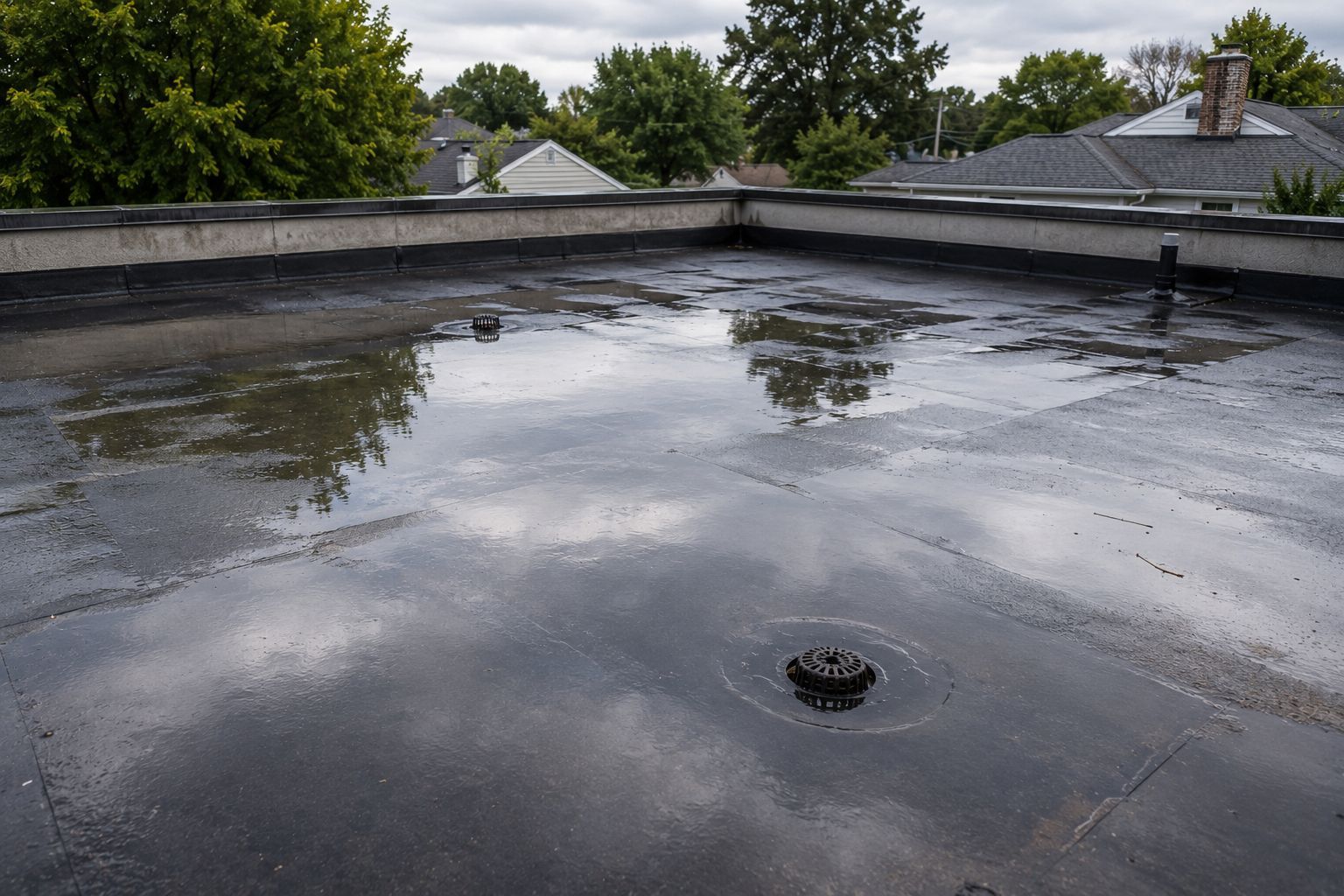
A flat termination gap typically allows water to drain away. A raised, tented gap along the wall can trap water against the base, where the roof and vertical surface should remain sealed.
It's Usually The First Place A Full Water Intrusion Starts
Roofers tracing leaks often find parapet tenting near the top of their list. The roof-to-wall transition depends on secure membrane anchoring, so separation can quickly compromise the entire waterproofing detail.
When It's Just Cosmetic and When It Needs a Repair
Not every sign of shrinkage is an emergency, and cutting into a roof that doesn't need it yet isn't the right move either. A few things separate a minor gap from a real problem.
How Wide The Gap Has Gotten
A hairline gap deserves monitoring. Separation wide enough to expose the substrate or allow a finger through indicates the problem has progressed beyond simple observation and needs attention.
Whether The Membrane Is Still Anchored
A pulled edge that remains fastened every few feet differs significantly from one completely detached from the termination bar across several continuous feet, requiring more extensive repair.
Whether The Tension Has Started Tearing The Rubber
Long-term shrinkage tension around fasteners or corners can eventually split the membrane instead of simply lifting it. Once torn, the repair requires patching rather than repositioning alone.
How Much It Has Changed Since The Last Inspection
A gap unchanged since last season behaves differently from one that has visibly expanded. Continued movement indicates the membrane remains under tension and shrinkage is still progressing.
Warning: Don't try to solve a pulling or tenting edge by running a bead of caulk or roofing cement along the gap and calling it fixed. Sealant doesn't hold up against ongoing membrane tension, and a bridge of caulk over a shrinking gap tends to crack open again within a season, often after trapping moisture underneath it in the meantime. A shrinking edge needs the tension relieved properly, not covered over.
How a Roofer Actually Fixes a Shrinking Rubber Roof
The repair approach depends on how far the shrinkage has progressed, but the underlying method is consistent.
The Tension Gets Relieved Before Anything Else Happens
At the affected section, the membrane is cut free from points still pulling on it. This allows the sheet to relax naturally, reducing constant strain before further repair work begins.
The Edge Or Seam Gets Reinforced, Not Just Resealed
Instead of simply gluing the original membrane back down, repairs typically add new EPDM strips and reinforced securement. Wider termination bars or perimeter reinforcement can provide stronger long-term holding strength.
Penetrations And Wall Terminations Get Re-Flashed
Where curbs, pipes, or wall transitions experienced tension from membrane shrinkage, flashing is inspected and rebuilt as needed. This helps prevent existing stress from shifting toward another vulnerable connection point.
A Reflective Coating Sometimes Goes On Afterward
When sunlight contributes significantly to shrinkage, a light-colored reflective coating can reduce surface temperatures and slow flexibility loss. This may help repaired sections resist renewed tension and extend their service life.
On a roof where shrinkage has only reached one or two isolated spots, a targeted repair at those locations is usually enough. Widespread tenting across most of the parapet line, or shrinkage that's already torn the membrane in multiple places, is a different conversation, one that starts to weigh a series of repeated repairs against replacing the membrane while it's still manageable.
Frequently Asked Questions
Is a rubber roof that's slightly pulling at one edge an emergency?
Not usually. A small gap that hasn't torn or grown recently can wait for a scheduled look, not an emergency call. Keep watching it, since shrinkage tends to move in one direction rather than reverse.
Can shrinkage happen on a rubber roof that was installed correctly?
Yes, though it's less common and slower to develop. A well-installed EPDM roof can still shrink after years of sun and thermal cycling, since rubber loses flexibility with age. It simply holds up longer overall.
Why is the tenting worse at the parapet than anywhere else on my roof?
The parapet is where the membrane transitions to a vertical wall, taking more strain from shrinkage than an open section. As the sheet pulls toward its center, the wall termination is first to show movement.
Does a shrinking rubber roof always mean it needs to be replaced?
No. Most shrinkage is addressed with a targeted repair at the specific edges, seams, or wall terminations affected. Replacement makes more sense when shrinkage has spread across most of the roof or torn the membrane.
How can I tell the difference between shrinkage and a roof that's just settling after installation?
A membrane relaxing into place in its first season typically stops moving within months, without a tented ridge or open gap. Shrinkage keeps progressing year over year, showing a visible pull toward each sheet's center.
Knowing When a Pulling Edge Needs Attention
A pulling edge or a tented ridge along the parapet is the membrane showing how it has aged, not a random flaw. Sun exposure, temperature swings, and time all work against the rubber's original flexibility, and wall terminations and seams are where that strain shows up first. Some sections hold steady for years after a small gap appears. Others keep moving until the anchoring point fails and water finds its way behind the wall or under the edge.
Rocco's All Type Roofing
has spent 40
years tracing this exact pattern across roofs in Brooklyn, Manhattan, Staten Island, and Queens, NY, watching which gaps settle and which ones keep pulling. That kind of repeated exposure to the same failure point is what separates a guess from an informed read of a roof's condition. A membrane that is shrinking rarely fixes itself, but knowing where to look and how far a gap has actually progressed turns an uncertain situation into a manageable one.