Flat Roof Pooling Water Days After Rain? Why It Won't Drain
Quick Answer: When a flat roof holds water for more than a day or two after the rain stops, that is ponding, not a normal puddle. It almost always comes down to one of a few things: a clogged or undersized interior drain or scupper, a drain set too high or in the wrong spot, insulation that has compressed into a low dip, or a deck that has settled and lost its slope. A flat roof is built with a slight pitch on purpose, so water that sits for days is a sign that pitch or the drainage path has failed somewhere. The fix is to find the low spot and the blocked outlet, then restore positive drainage.
You climb up onto the roof two or three days after a hard rain, expecting it to be dry, and instead you find the same puddle sitting in the same corner it always does. The sky has been clear for 48 hours. The gutters downstairs stopped running yesterday. Yet up here the water has not moved. On a rowhouse or brownstone with a flat roof, that standing water is one of the most common things we get called about, and it is almost never harmless.
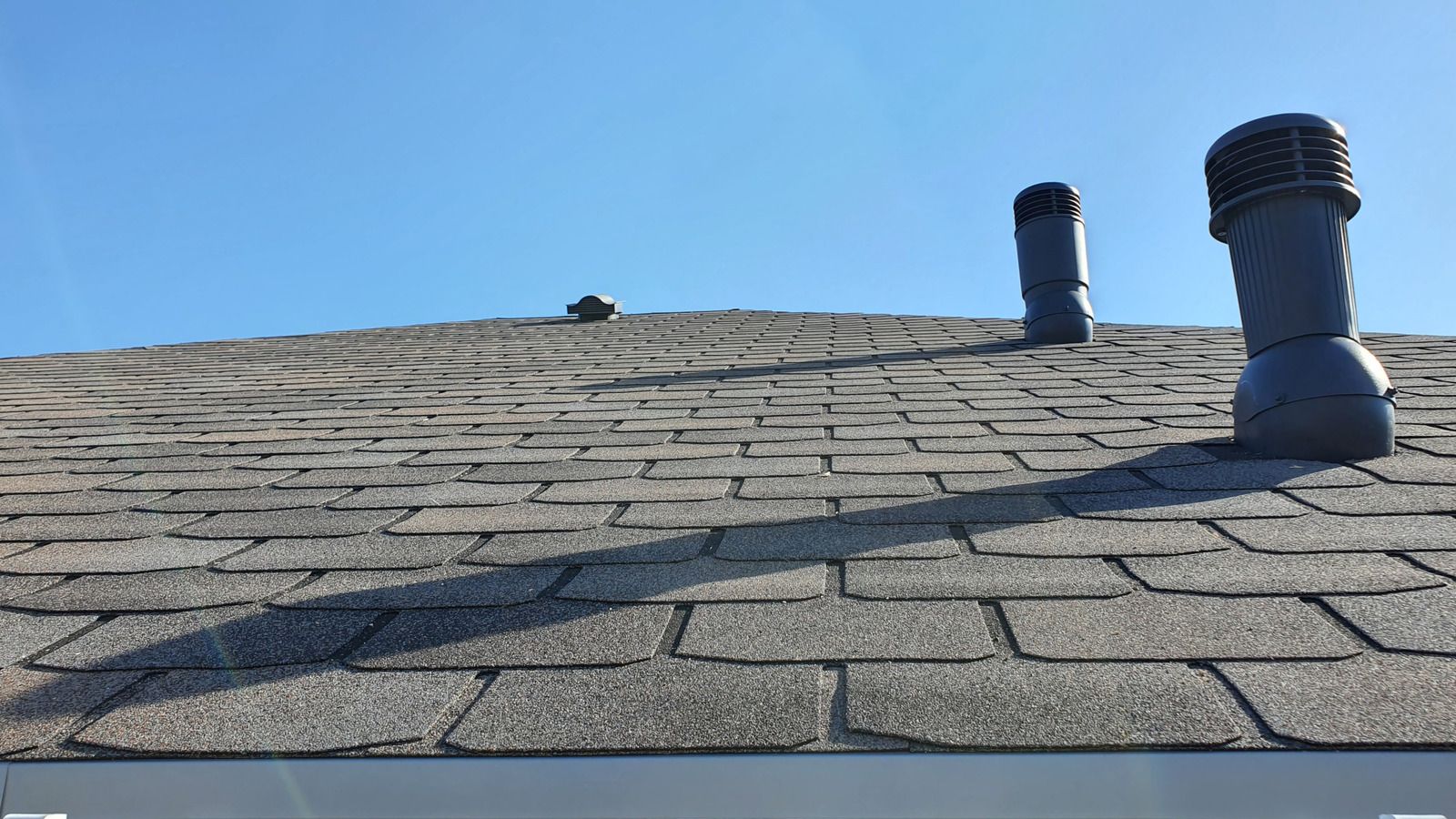
A flat roof that still holds water days later is telling you something specific: the water has no way off the roof. On a sloped shingle roof, gravity does the work and you never think about it. On a low-slope roof over a Brooklyn or Queens building, drainage is engineered, not automatic, and when any part of that system fails, the water just sits. Understanding why it will not drain is the first step to getting it off your roof for good.
What Counts as Pooling and What Does Not
Not every puddle is a problem. After a heavy downpour or a nor'easter dumping rain for hours, it is normal for a flat roof to hold some water for a while as it works its way to the drains. The benchmark most roofers use is time. Water that is still standing 48 hours after the rain stops is considered ponding, and ponding is the water you need to pay attention to.
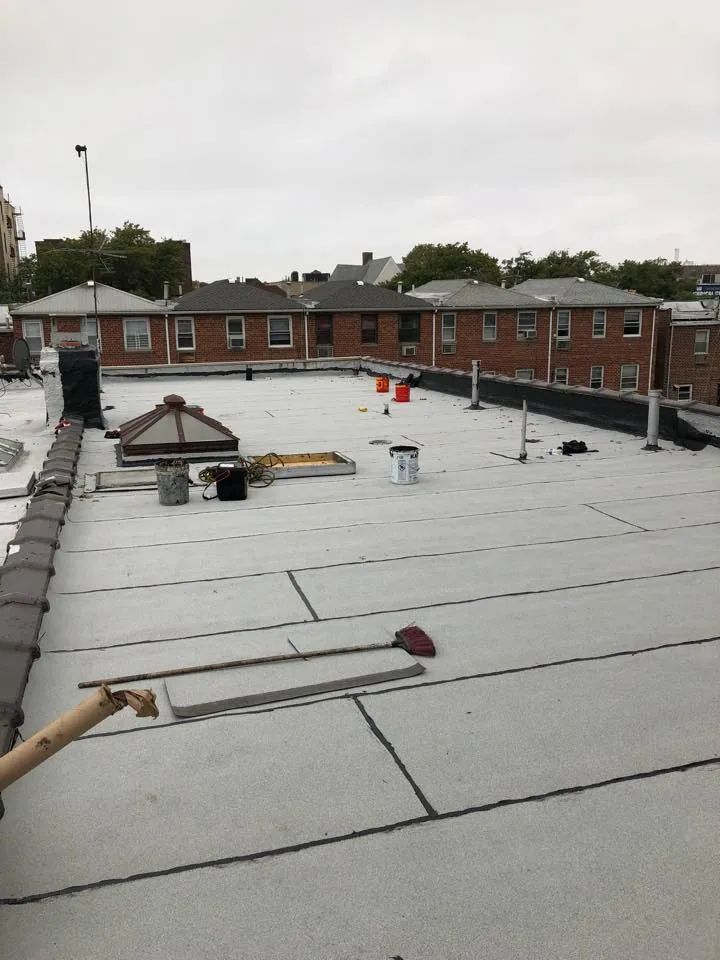
A flat roof is not actually flat
Low-slope roofs are built with a slight pitch to direct water toward drains or scuppers. When water remains for days, the intended slope has likely been compromised by blockages, settlement, or improper roof construction.
The 48-hour test tells you which puddle matters
A thin film that dries quickly is usually harmless. Water remaining longer than 48 hours, especially in the same location after every storm, often signals a drainage problem that should be professionally evaluated before damage develops.
Why the Water Isn't Draining
When water refuses to leave a flat roof, the cause is almost always in the drainage path or in the shape of the roof itself. Here is what we look for first.
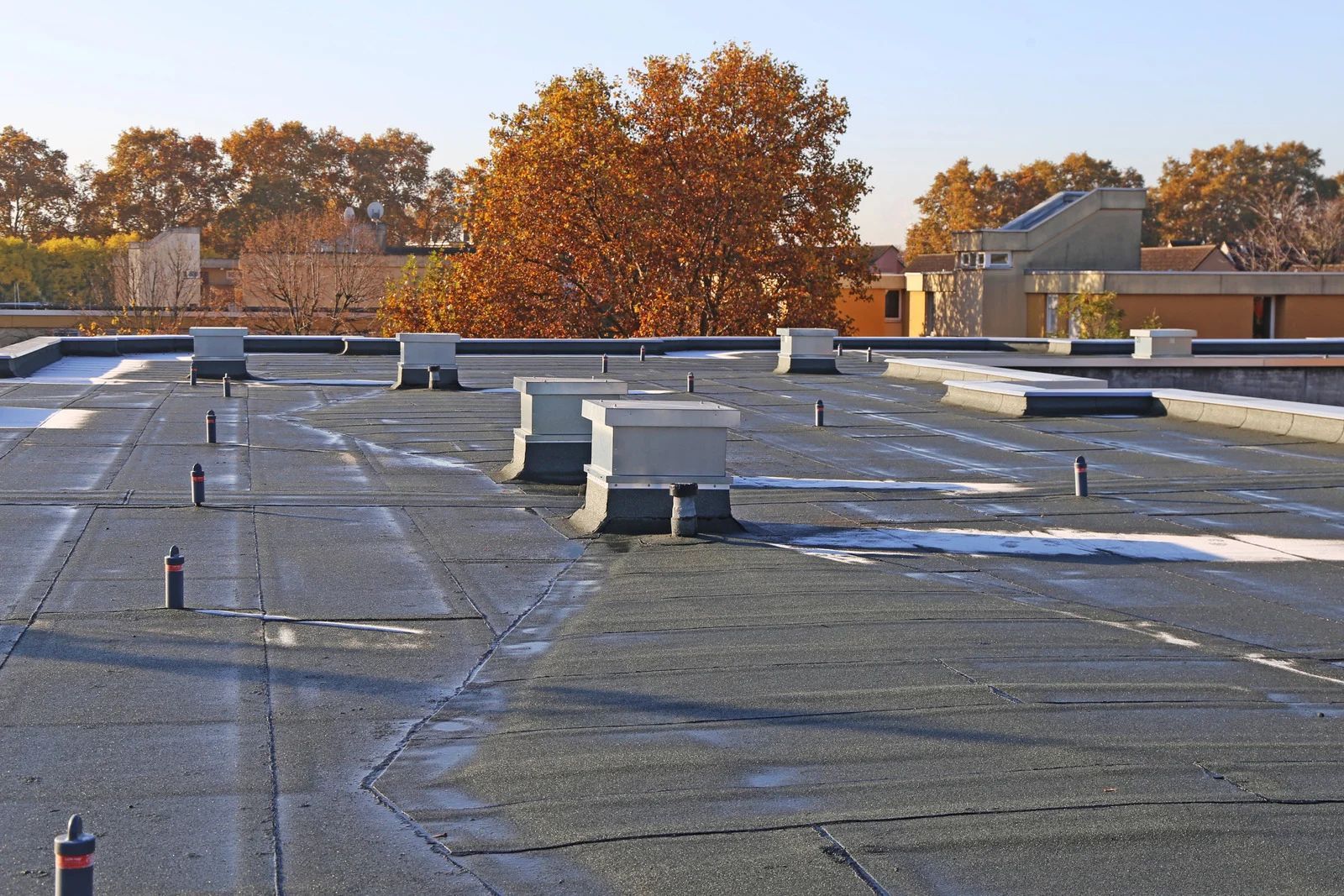
The interior drain or scupper is clogged
Leaves, roofing granules, dirt, and other debris can block interior drains or scuppers, slowing water flow. Even a partial blockage allows only limited drainage, leaving standing water on the roof long after rainfall ends.
The drain is set too high or in the wrong place
A drain must sit at the roof's lowest point to work effectively. If installed too high or surrounded by poor slope, water collects beside the drain instead of flowing into it.
The drain is undersized for the roof
An undersized drain cannot remove heavy rainfall quickly enough, especially on large roofs. Water backs up during storms and remains on the surface longer, increasing the risk of membrane wear and future leaks.
The slope was wrong from the start
Improper roof design or installation can prevent water from reaching drains. Without adequate slope, standing water develops regardless of drain condition, creating recurring ponding that maintenance alone cannot permanently solve.
Tip: Note where the water sits and how long it lingers, and take a photo from the same spot after each rain. If the puddle lands in the same corner every time and is still there on day three, that pattern points a roofer straight to the low spot and the failed drainage path, and it saves guesswork once someone is up on the roof.
When the Roof Itself Has Gone Out of Shape
Sometimes the drains are clear and the original slope was fine, but the roof has physically changed shape over the years. On older NYC buildings, this is common.
The insulation underneath has compressed
Compressed rigid insulation creates low spots beneath the roofing membrane where water naturally collects. As ponding continues, the added weight can deepen the depression, making drainage progressively worse over time.
The building has settled
Over time, structural settlement can alter the roof's original slope. Even minor movement in an older building may create low areas where water consistently collects instead of flowing toward designated drainage points.
Dips have formed around penetrations and the parapet
Skylights, vents, HVAC curbs, and parapet walls often create shallow depressions that trap water. As roofing materials age, these low areas deepen, allowing standing water to remain around critical roof details.
Rooftop condensation keeps refilling the pool
Air conditioning and mechanical equipment can produce condensation that continually drips onto the roof. Without proper drainage, this steady moisture creates puddles that repeatedly return even after rainwater has already drained away.
Why Days-Later Pooling Is Worse Than It Looks
It is tempting to shrug off a puddle, especially one that eventually evaporates. Standing water works against the roof the entire time it sits there, and the damage adds up quietly.
Water is heavier than owners expect
Just one inch of standing water weighs a little over five pounds for every square foot it covers. Spread that across a wide pond and you are asking the roof deck to carry hundreds of pounds it was never meant to hold day after day. That constant load presses the deck down, which deepens the dip, which holds more water, in a cycle that slowly deflects the structure.
Standing water breaks the membrane down
Constant exposure to water erodes roofing materials faster than normal weathering, especially at the seams and overlaps where two sheets meet. A membrane that would shed rain for decades starts to degrade early where it is left soaking.
Ponding can climb above the flashing
Every roof feature has flashing built up to a certain height to keep water out. When a pond gets deep enough to rise above that flashing line, water walks right over the top and into the building. This is how a puddle that sat harmlessly for a year suddenly becomes a ceiling stain on the top floor.
Warning: Do not try to solve a stubborn pond by piling on a bucket of roof coating or a levelling compound to build up the low spot yourself. Used in the wrong place, that added material just shifts the water somewhere else, adds more dead weight to a deck that is already sagging, and can trap moisture under the patch. A low spot that keeps ponding needs the slope and drainage corrected properly, not buried under a field repair.
Winter turns a pond into a pry bar
In a New York winter, water that will not drain freezes. Freeze and thaw cycles expand and contract in the low spot, and that repeated action erodes the mineral surface on modified bitumen roofs and stresses seams on membrane roofs. A pond that was merely annoying in October can be splitting the roof open by February.
How the Drainage Actually Gets Corrected
Because the same symptom has several different causes, sorting it out takes a real look at the roof rather than a guess from the ground. A roofer traces where the water sits, checks whether the drains and scuppers are clear and set at the low point, and looks for compressed insulation, settlement, and dips around the penetrations and parapet.
Clearing and correcting the outlets comes first
If a drain or scupper is choked, clearing it and adding a proper strainer or debris guard can solve a surprising number of ponding problems outright. If an outlet is undersized or badly located, it may need to be enlarged, added to, or moved to the true low point.
Tapered insulation rebuilds the slope
When the roof has lost its fall or never had enough, tapered insulation boards are used to rebuild positive drainage across the surface, feeding water toward the outlets. Around a drain, a tapered sump is built so the roof steps down into the drain instead of leaving it stranded on a flat plane.
Crickets steer water around the obstacles
Where water backs up behind a chimney, a curb, or a wide penetration, a cricket, which is a small built-up ridge, is added to split the flow and push it around either side toward the drains. A cricket is deliberately built at a steeper pitch than the main roof so it clears water reliably.
What you end up with is a roof that actually sheds water the way it was meant to, instead of holding it for days and slowly wearing itself out. That is a far better outcome than climbing up after every storm to find the same puddle waiting for you.
Frequently Asked Questions
How long can water sit on a flat roof before it is a problem?
Water remaining on a flat roof for more than 48 hours after rainfall is considered ponding. Persistent puddles can weaken roofing materials, increase structural stress, and should be professionally inspected before damage worsens.
Is a little standing water on a flat roof ever normal?
Yes. Small amounts of water may remain briefly after heavy rain. However, water that stays for days or repeatedly forms in the same location usually indicates a drainage or slope problem needing attention.
Why does the puddle sit right next to a drain that looks clear?
A drain may appear open but still sit above the roof's lowest point. Improper slope, previous roof layers, or uneven surfaces can prevent water from reaching the drain, causing persistent pooling nearby.
Can pooling water on a flat roof cause a leak inside?
Yes. Standing water accelerates membrane wear, weakens seams, and increases the chance of leaks. Over time, water can penetrate vulnerable areas around drains, flashing, or roof penetrations and enter the building.
Why is my flat roof pooling worse in winter?
Winter conditions make ponding more damaging because standing water freezes and expands. Repeated freeze-thaw cycles stress roofing materials, while snowmelt and frozen drains increase the amount of water remaining on the roof.
Does pooling water mean I need a whole new roof?
Not always. Many ponding issues can be corrected by improving drainage, adding tapered insulation, or adjusting roof slopes. A professional inspection determines whether targeted repairs or full roof replacement is the better solution.
Getting the Water Moving Again
A flat roof that still holds water days after the rain is not a puddle to wait out. It is the drainage system telling you that water has no path off the roof, whether from a choked drain, an outlet set too high, compressed insulation, or a deck that has lost its slope. Left alone, that standing water adds weight, breaks down the membrane, climbs toward the flashing, and freezes into a pry bar every winter. The right move is to find the low spot and the blocked path, then restore the pitch and the outlets so the roof drains the way it was built to.
Book a
flat roof
drainage inspection — If your roof is still holding water long after the rain stops, that ponding is quietly loading the deck and wearing down the membrane at the seams. With 40
years of experience serving Brooklyn, Manhattan, Staten Island, and Queens, NY, Rocco's All Type Roofing
traces where water collects, inspects interior drains, scuppers, and parapets, and identifies whether the problem is a clogged outlet, compressed insulation, lost slope, or a drain set too high. The team restores positive drainage with tapered insulation, corrected outlets, or crickets so water flows off the roof properly. Reach out today to schedule your inspection and get standing water off your roof for good.